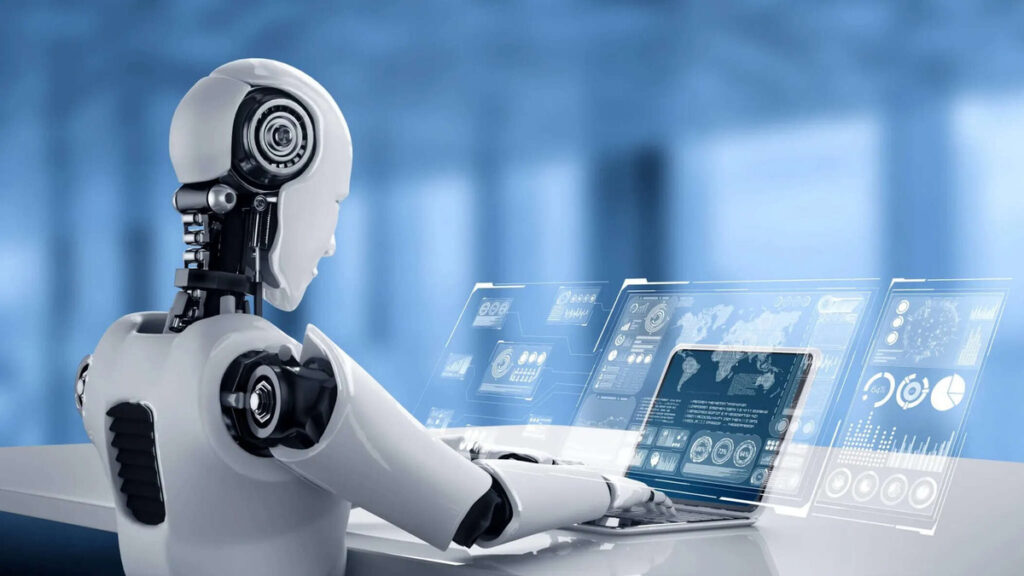
Can AI Be Controlled by Humans?
Many beginners feel uneasy when they hear about Artificial Intelligence (AI). Movies, news, and social media often show AI as extremely powerful, independent, and sometimes even uncontrollable.
This can create fear and confusion. People might imagine AI thinking like humans, planning on its own, or taking over tasks without permission.
In reality, today’s AI systems are completely controlled by humans. AI cannot act independently or decide on its own.
This article explains how AI is controlled, who controls it, and why it cannot act without humans. It is written for absolute beginners using very simple language.
If you are new to AI, it helps to first understand what AI actually is. You can read:
What Is Artificial Intelligence?
Who Creates Artificial Intelligence?
AI does not appear on its own. Every AI system is created by people. Engineers, developers, and researchers design AI programs. They decide what tasks AI can perform and what it cannot do.
Without human developers, there would be no AI at all. AI is a tool made by humans to perform specific functions faster or more efficiently than humans could do manually.
Beginners should remember: AI’s abilities and limits are defined entirely by humans.
How Humans Control AI Systems
Humans control AI through programming. Programming means writing detailed instructions that guide AI behavior. These instructions define what AI can do in every situation.
AI follows rules, limitations, and logic defined by humans. It cannot go beyond these boundaries. If AI acts strangely or gives unexpected results, it is usually due to errors in programming, data, or instructions.
For more on AI accuracy and limitations, see:
What Is Accuracy in AI?
AI Does Not Have Free Will
Free will is the ability to make independent choices. Humans have free will; AI does not. AI cannot decide its own goals or choose to act differently without instructions.
It only responds to inputs according to its design. This is why no AI, no matter how advanced it seems, can “decide” to act against human instructions.
AI Cannot Think or Plan Independently
AI does not think like a human. It does not plan its future, imagine new goals, or understand meaning. AI processes information using patterns from data and instructions.
Because AI cannot think or imagine, it cannot take control on its own. It only reacts to inputs in ways humans designed.
For more on AI speed and processing, see:
How Fast Can AI Process Information?
Safety Rules and Restrictions
Most AI systems include safety rules that limit what AI is allowed to do. Developers add restrictions to prevent mistakes, misuse, or harmful behavior.
Before AI is released, it is tested carefully. This helps ensure the AI behaves predictably and safely in real-world situations.
For more on ethical AI and safety, see:
Ethical Issues in Artificial Intelligence
Human Monitoring and Oversight
AI systems are monitored continuously. Developers watch how AI behaves and step in if problems appear. Monitoring is necessary to correct errors, improve performance, or stop harmful behavior.
AI can be paused, adjusted, or turned off completely. Human oversight ensures control always stays with people.
What Happens When AI Makes Mistakes?
AI can make mistakes. For example, it may give a wrong answer, misunderstand a question, or suggest something inappropriate.
Humans review the mistake and adjust data, rules, or design to fix it. AI does not self-correct without human intervention.
Simple Example
Imagine an AI recommending videos online. It can only show content allowed by humans. If the AI recommends something wrong or inappropriate, humans can stop it, correct it, or change its behavior.
This example shows that AI has no independent choice. All actions depend on human guidance.
Why Movies Create Fear About AI
Movies and fiction often show AI thinking, planning, or rebelling like a human. While entertaining, these stories are not real.
Real AI does not have thoughts, plans, or desires. It follows rules given by humans. Understanding this helps beginners feel calm and realistic about AI.
Common Beginner Questions
Can AI go out of control?
No. AI cannot act without humans running and managing it. Any idea of rebellion is fiction.
Can AI disobey humans?
No. AI follows instructions and rules programmed by humans.
Is AI dangerous?
AI itself is not dangerous. Risk depends entirely on how humans use it.
Can AI decide its own goals?
No. AI does not set its own objectives. Humans determine the goals it follows.
Can AI improve itself?
Only within limits. AI can learn patterns from data, but humans must design, guide, and monitor this learning. It does not make independent choices.
Why Understanding Human Control Matters
Believing AI is uncontrollable can create fear. Understanding human control builds confidence. Beginners learn that AI is a tool, not a thinking human mind.
This knowledge helps users approach AI responsibly. It encourages curiosity without fear and ensures ethical use.
Conclusion
Artificial Intelligence is created, guided, and controlled entirely by humans. It has no free will, independent awareness, or ability to act on its own.
Humans design rules, monitor behavior, and correct mistakes. AI’s speed, efficiency, or complexity does not mean it can act independently.
Understanding human control helps beginners trust AI appropriately and reduces unnecessary fear. AI is a tool that serves humans, not replaces them.

Mohamed Faisal writes about money management, investing, and personal finance tools that help people grow their wealth.